What Is POTS?
Understanding Postural Orthostatic Tachycardia Syndrome
Postural Orthostatic Tachycardia Syndrome — commonly known as POTS — is a form of dysautonomia, which simply means a disorder of the autonomic nervous system. This is the system responsible for all the automatic things your body does to keep you alive, like regulating heart rate, blood pressure, temperature, and digestion.
When someone has POTS, their body struggles to properly manage blood flow and heart rate when they’re standing or moving. This can lead to a wide range of symptoms that are often confusing, unpredictable, and misunderstood — even by medical professionals.
POTS is real.
POTS is complex.
And POTS is something you can learn to manage with the right tools and support.

How Does POTS Affect the Body?
In a healthy body, when you stand up, blood quickly shifts downward due to gravity. The autonomic nervous system responds instantly by tightening blood vessels and increasing heart rate just enough to keep you steady.
In POTS, this process doesn’t happen the way it should.
Instead, blood tends to pool in the lower body, and the heart may race — sometimes increasing by 30 beats per minute or more — in an attempt to compensate. This causes many of the hallmark symptoms people with POTS experience daily.
What Are Common Symptoms of POTS?
Everyone’s experience is different, but many people with POTS deal with:
Rapid heart rate when standing
Lightheadedness or dizziness
Fatigue or “energy crashes”
Brain fog and difficulty concentrating
Nausea or GI issues
Trembling or weakness
Headaches and migraines
Temperature regulation problems
Fainting or near-fainting episodes
Shortness of breath
Sensory overload
Exercise intolerance
Sleep disturbances
Symptoms can vary from mild to debilitating, and can fluctuate day to day or even hour to hour.
What Causes POTS?
POTS does not have a single cause, but it often appears after:
A viral or bacterial illness
Physical trauma or surgery
Pregnancy
Long-term stress or chronic illness
Autoimmune conditions
Inflammation
For some people, it develops gradually. For others, it can come on suddenly after a major health event.
POTS is not in your head.
It’s not anxiety.
It’s not “just dehydration” or being “out of shape.”
It’s a real physiological condition — and understanding it is the first step toward managing it.

How POTS Is Diagnosed?
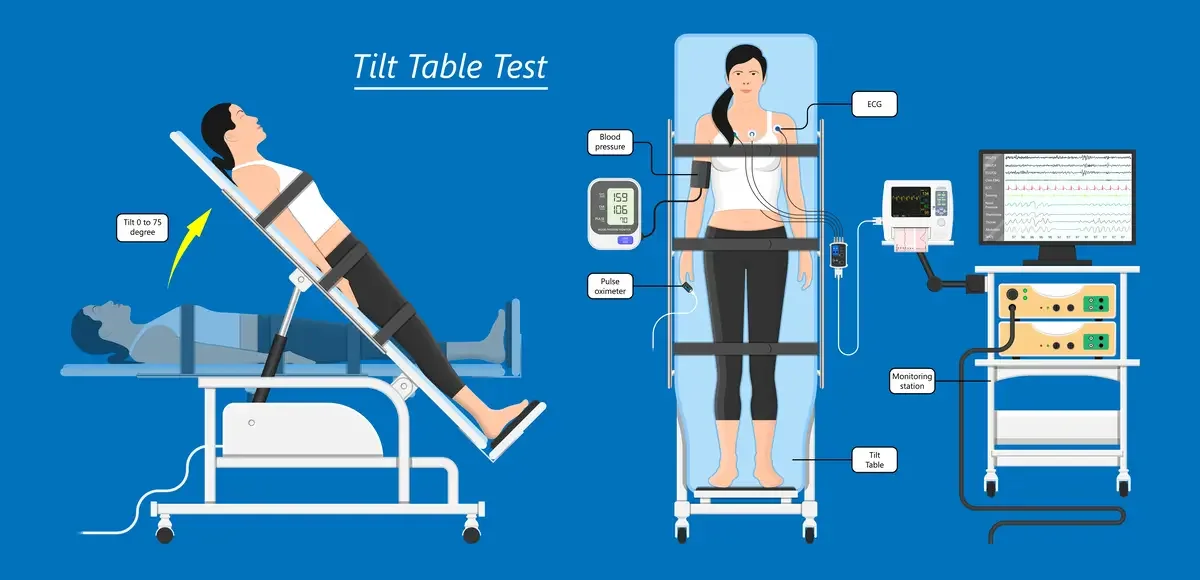
A common diagnostic tool is the tilt-table test, which measures heart rate and blood pressure changes from lying down to standing. Diagnosis can also include blood tests, autonomic testing, and reviewing medical history.
Unfortunately, diagnosis can take years because many symptoms overlap with other conditions — and awareness of POTS is still growing.
This is why education, self-advocacy, and support are so important.
Can POTS Improve?
Yes — many people see significant improvement with the right approach.
While POTS does not always “go away,” symptoms can often be reduced, stabilized, and managed so you can live a more functional, fulfilling life.
Research and patient experience consistently point to strategies such as:
• Increasing fluid and salt intake
• Compression gear
• Nervous system regulation
• Gentle, progressive exercise
• Nutrition adjustments
• Pacing and energy management
• Identifying triggers
• Stress reduction techniques
Healing is rarely linear — but progress is possible as long as you make the right steps.

How Coaching Helps
Managing POTS can feel overwhelming, especially when symptoms change constantly or when medical guidance feels limited. This is where personalized support can make a profound difference.

As a POTS Health Coach, I help you:
• Understand what’s happening in your body
• Build daily routines that prevent crashes
• Stabilize your energy
• Strengthen your nervous system
• Improve hydration and nutrient intake
• Reduce flare-ups and triggers
• Gain confidence in managing your symptoms
• Feel emotionally supported by someone who truly understands
You don’t have to figure this out alone.
You don’t have to guess your way through healing.
There are tools that can make life with POTS more manageable.
Let’s Chat.
Fill out this form, and I will get back to you within 24 hours.
Latest Articles